The short answer: not more than 10 to 15 miles to the closest truck repair shop. Why?
If you drive more than 10 to 15 miles to the nearest shop, you could run the risk of any of the following:
- Gear slipping
- Overheating transmissions
- Delayed or rough shifting
- Indirect damage to internal components like a rear or front differential (and more)
- Transmission failure
- Causing a safety hazard on the road
While we understand the desire to travel to the next rest stop before checking the issue. We recommend bringing your vehicle to an expert diesel truck repair shop to prevent further potential for damage, especially since the vehicle is unsafe to drive.
If you want to understand how long you can drive with a transmission leak without compromising your transmission, you’ve come to the right place.
In this article, we’ll walk you through common symptoms that a transmission leak has occurred, as well as what to check to ensure your leak doesn’t cause catastrophic damage. Let’s dive in.
5 Common low transmission fluid signs and symptoms
| 1. Overheating in the transmission system 2. “Check Engine” lights turn on 3. Strange sounds come from the transmission 4. Your car pulls to one side while driving 5. Gear shift problems |
1. A leaking transmission can cause a transmission to overheat
If your transmission system is overheating, your vehicle could be low on transmission fluid. If you see the “Check Engine” light turn on in your vehicle’s dashboard, the light could be another indication that the system is overheating.
Furthermore, if you experience smoke coming from the hood of your truck, particularly in the transmission fluid box, you should bring your vehicle in for service. If you notice your transmission system is overheating, pull over, and consider towing it to your nearest diesel truck mechanic.
2. “Check engine” light turn on? It could mean leaking transmission fluid.
If you notice your “Check Engine” light turn on, you may be able to make it 10-15 miles to the closest shop for repairs. Otherwise, you run the risk of causing damage to your engine.
If your “Check Engine” light turns on, and you can’t determine the issue by merely looking at the vehicle, we recommend bringing it to a mechanic as soon as possible.
3. Unusual sounds coming from the vehicle
If you hear metal-on-metal grating and a strange smell coming from the engine bay, you should not keep your vehicle running. Whenever you hear metal gears grinding, you should stop your vehicle immediately and allow a professional to handle the issue.
Unusual sounds caused by metals that are grating may indicate that the lubrication in your transmission system is low. If possible, pull over on the side of the road and drive your vehicle to the closest auto repair shop.
Bring your truck (or car) to your trusted diesel repair technician if you notice your truck’s dashboard (or car’s dashboard) “Check Engine” light turns on. Neglecting repair work could result in a steeper price tag for truck-related repairs.
4. Pulling can happen
A bumpy, unsteady ride isn’t always due to poor road conditions. If you notice your truck is jerking or pulling to one side, it could be leaking transmission fluid or be low on transmission fluid.
What’s more, when fluid is low, gear teeth won’t work as they should, which can result in jerking while driving.
Instead, you should inspect your vehicle and, if possible, bring it to your local auto repair team. You can also do the following:
- Check fluid levels and top it off with transmission fluid if you have any handy.
- Inspect for visible leaks under your truck to accurately determine the source of the issue.
- Contact a truck advisory team for advice on what to do next to prevent further harm to your truck.
- Bring your vehicle to a diesel repair technician to have your transmission system inspected.
5. Transmission leaks can cause problems with shifting gears
If you’re experiencing issues with shifting gears, or if shifting the gearstick becomes more challenging, this could be one of the warning signs that you have an issue in your transmission system.
Often, low levels of fluid lubrication can create some difficulty in shifting gears. Drivers: It’s recommended to have your transmission checked every 60,000 to 100,000 miles.
When you bring your vehicle in for regular preventive maintenance, you’ll ensure a safer, smoother ride, in addition to a longer-lasting truck. Consider bringing your truck in for regular maintenance to prevent dry and damaged gearboxes and other auto problems.
Facts on trucking and transmissions

“There are a lot of uncomfortable situations where you have to ask yourself, ‘Do I really have to do this?’ A lot of successful small business owners are just fearless,” says Dave Bloom, founder and owner of Pine Aire Truck.
Doing the right thing for your company and your fleet vehicles is sometimes tough, but at the end of the day, whether deciding between replacing transmission fluid or a new service your business offers, the best truck businesses are fearless.
They do what needs to be done, when it needs to be done, before issues escalate. Check out the exclusive, one-minute interview of Dave Bloom on what it means to succeed as a small business owner.
Don’t drive with a transmission leak. Get it checked by an automotive specialist.

If you’re ready to bring your vehicle to a diesel repair technician for transmission help, they’ll check the following on your truck:
- They’ll typically remove the dirty used fluid and replace it with new transmission fluid to defend against further problems in your transmission.
- They may opt for a transmission flush, which includes adding a cleansing or “flushing” agent to the transmission fluid prior to changing the transmission fluid.
Ultimately, driving with leaking fluid can cause a world of hurt for you, your vehicle, and nearby drivers. If you notice a leak on your vehicle, do your best to drive to the closest shop without causing a safety hazard, and pay attention to how your vehicle responds during the drive.
Doing so will help you relate the symptoms of your vehicle to your repair technician to give them a better understanding of how to repair your vehicle. Plus, if you need more fluid, your diesel repair technicians have the resources to top your truck up and keep your vehicle running as it should.
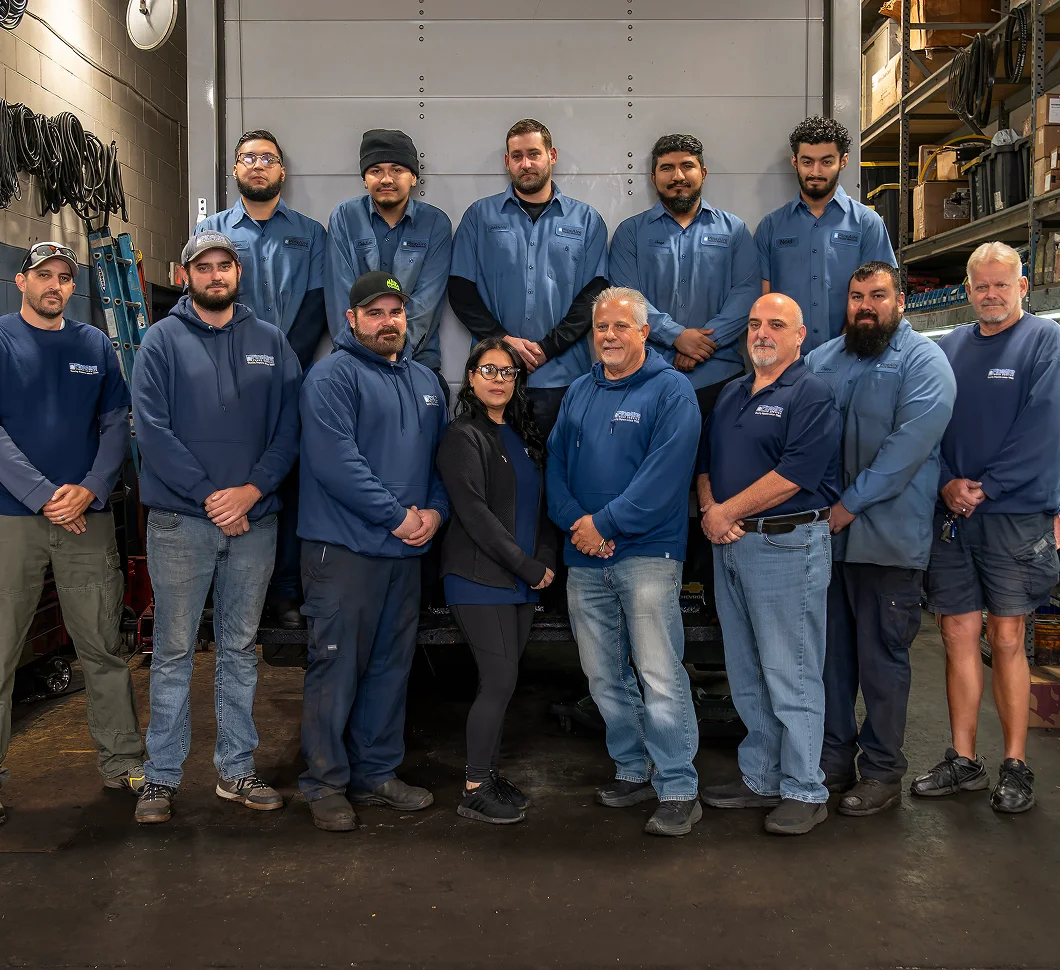
We hate to see truck drivers deal with expensive repairs that could have been fixed earlier. If you find yourself on Long Island, New York, and want the expertise and knowledge of a seasoned team of diesel truck mechanics, don’t hesitate to reach out to us.
Since 1986, we’ve been delivering exceptional truck service, routine maintenance, and truck repairs beyond expectation. If you hear noises while changing gears or need someone to diagnose and fix the root cause of your transmission troubles, contact the experienced diesel technicians here at Pine Aire Truck.
We’ll help you resolve the source of the fluid leaking from the engine and get you on your way, safe and sound.
We look forward to serving you and helping you get back on the road. To schedule an intake appointment for transmission service, contact us today.