
Truck drivers and fleet managers: how can you prepare for and pass roadside inspections? We’ve likely all asked ourselves this question at some point in our career.
Neglecting to be prepared for a roadside inspection can cause problems — not to mention penalties and fines — for a fleet and driver team.
The trick is to be prepared ahead of time.
If you’re wondering what you can do to stay ahead of the curve and keep your fleet compliant with federal authorities while on the road, you’ve come to the right place.
In this article, we’ll discuss our top 9 tips for how to prepare for and pass a roadside inspection.
Top 9 tips for passing roadside inspections

| 1. Keep the cab of your truck clean 2. Conduct a complete pre-trip inspection 3. Ensure all electronic logging devices (ELD) are up to snuff before driving 4. Understand hours-of-service limits and rules of exceptions that may apply 5. Keep all in-truck paperwork organized and ready 6. Conduct a complete post-trip inspection 7. Complete driver vehicle inspection reports (DVIR) and note any safety issues that occurred 8. Have a positive attitude if pulled over 9. Seek expert advice from a fleet advisory team |
1. Keep your truck cab clean
The first tip on our list is all about cleanliness. Pay attention to the overall cleanliness of the truck cab.
A messy cab means items can drop into the area of the brake and accelerator pedals. You’ll want to remove extra garbage, especially from the top of the dashboard, which could impact a driver’s ability to drive.
Plus, a messy cab can make an officer suspicious, which can mean an officer will be suspicious of trouble in and around the vehicle.
Overall, you want to give an impression that you’re on your game, that you care, and that you want to comply with local authorities.
“The inspectors we’ve worked with over the years have said, ‘Is the driver on their phone? Is their seatbelt buckled? Is your driver’s license readily available? Is insurance for the truck available?’ You are creating an impression with the inspector right away — and having that documentation ready goes a long way in creating a good impression. Those kinds of things go a long way with passing inspections,” Dave Bloom, Founder of Pine Aire Truck says.
In other words, keeping a truck clean, organized, and paperwork-ready is essential if an official pulls you over.
Always keep your cab clean to avoid potential dangers and obstacles — and to avoid stoking the flames of suspicion from local authorities.
2. Complete a comprehensive pre-trip inspection
Aside from adhering to federal regulations, creating a comprehensive pre-trip inspection can help ensure a more organized and safe operation. Each company’s pre-trip inspection will look different, as each company has different standards and items that need checking.
As a general rule of thumb, you should check all items in the same sequence each time to create healthy habits for thorough inspections. Company personnel must conduct an inspection.
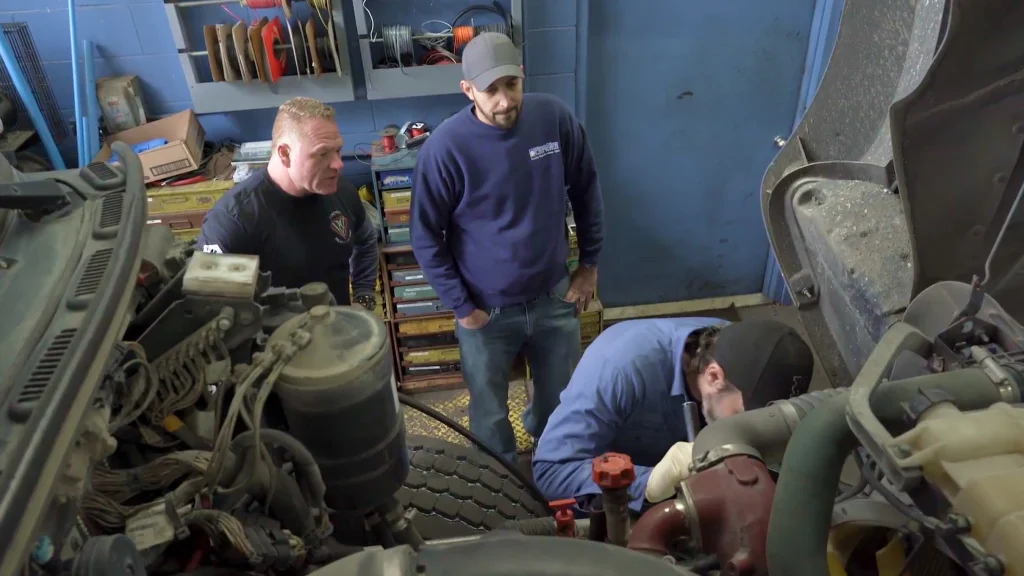
“Taking 10 minutes a day to have a person on your staff conduct a truck inspection can save you time, money, and stress,” Dave Bloom, Owner of Pine Aire Truck, Inc. says. “We do seminars and teach people how to do walkaround truck inspections on their trucks, so they can familiarize themselves with how to stay compliant with Federal Motor Carrier Safety Administration (FMCSA) regulations.”
Part of the inspection should include a review of all paperwork and certificates needed to operate a safe vehicle.
For example, a driver’s health information, such as a medical certificate, must also be up to date.
“Otherwise you could be taken out of service,” Dave continues. By conducting regular, pre-trip inspections, you set yourself up for a safer and smoother trip for all parties involved.
The most important part to keep in mind for passing an inspection is having an inspector feel you’re aware of the areas on your truck that are the most obvious that need repairing. If you walk in with two bald tires, your inspector will think you have no clue or don’t care about your operation,” Dave continues.
Passing an inspection comes down to showing that you care — and making your attentiveness and care visible to the inspector.
3. Ensure electronic logging devices (ELD) are updated and ready
An electronic logging device (ELD): it’s a technology that records a driver’s driving time and other aspects of hours-of-service (HOS) records. An ELD captures data on whether the engine is running or moving.
Prior to starting a trip, drivers should verify that the ELD display is in a fixed position where the driver can view the device from the front seat of the truck. What’s more, drivers should also be able to present their record of duty status to an inspection officer via email, USB, Bluetooth, or the World Wide Web.
Drivers need to make sure that HOS devices are charged, operating, and updated with their most recent duty status changes. Also, any unassigned driving time must have been accepted or rejected by a driver’s office staff team before a driver begins driving for the day.
In terms of driving a commercial motor vehicle (CMV) for personal use while off-duty (for what’s called personal conveyance (PC) events), a driver must be off duty when logging these hours. As such, a PC event that has been falsified — such as a drive to a maintenance shop or a shipping yard — tends to be one of the many common driver roadside violations for which drivers are pulled over during a roadside inspection.
In other words, depending on whether you’re an over-the-road driver or a local driver, you need to know the rules.
4. Familiarize yourself with hours-of-service limits (and their exceptions)
Drivers and officers should be familiar with hours of service rules. Also, drivers should be familiar with how many consecutive hours they’re permitted to drive before needing to take a break.
Understanding parameters for whether drivers qualify for exceptions — and how to use their electronic logging device to help monitor their hours for compliance reasons — is key to preparing for and passing roadside inspections.
5. Keep your truck driver’s in-cab paperwork organized
Should an inspector ask to see your paperwork, drivers should keep all documents up to date, organized, and accessible in their cab. Common documents that are needed include:
- Driver-related documentation: driver’s licenses, medical certificates, insurance, and applicable medical waivers
- Supporting vehicle-related documentation: bills of lading, expense reports, and insurance
- Hazardous material documentation: HazMat endorsements
- Permit credentials: like International Registration Plan (IRP) cab cards, International Fuel Tax Agreement (IFTA) license and decals, and any temporary permits for operating the vehicle
6. Conduct a comprehensive post-trip inspection
Just as a fleet team conducts a thorough pre-trip inspection, post-trip inspections are just as important. Post-trip inspections should include the same vehicle components checked in the pre-trip inspection.
As such, you’ll want to establish a consistent step-by-step process for the post-trip inspection. Make sure all components are accounted for and nothing is excluded from the process.
7. Write up driver vehicle inspection reports (DVIR), and note safety defects
Drivers must complete a driver vehicle inspection report (DVIR) if operating a property- or passenger-carrying vehicle. DVIRs are helpful for carriers to note if and when a defect occurs that affects the safety of the vehicle — or that can cause potential breakdowns.
Regardless of whether a defect is indicated, drivers should complete driver vehicle inspection reports, as carriers may request them at any time.
8. Above all, be kind, positive, and friendly
When state troopers, DOT officers, and other law enforcement personnel pull over drivers for vehicle inspections, attitude is key. Drivers should be kind, calm, respectful, and friendly while talking with the officer.
While a driver can’t avoid an inspection once pulled over, they can make their lives much easier by having a positive attitude and being friendly to officers.
9. Seek expert advice from a fleet provider or consultant
Both drivers and motor carriers share equal responsibility in keeping roads safe and vehicles violation-free. For example, drivers need to be ready for a roadside inspection, while carriers need to train their drivers how to comply with authorities and be familiar with changing regulations.
If you need help familiarizing yourself with local regulations, inspection criteria, and other roadside inspection-related points, you can always reach out to a truck advisory team or a local fleet consultant. Fleet consultants and truck advisories make a living out of servicing fleet trucks and providing expert advice for everything under the sun related to fleets.
No topic is off-limits. Whether keeping a fleet safe and compliant with federal authorities or learning how to hire, train, and retain a winning fleet team, reaching out to a fleet advisory team can help reduce stress and anxiety and increase confidence and peace of mind when dealing with roadside stops and inspections.
Feel free to reach out to one of our Pine Aire Truck advisory team members if you’re curious about what truck advisory looks like in action. Our team has more than 35 years of dedicated fleet experience, and we’d be happy to share our knowledge with you to better serve your needs.
Pine Aire pro tip

Speaking of pre-trip inspections, watch as our general manager, John Sganga, walks you through step-by-step how to conduct a thorough and complete pre-trip inspection.
Check out this quick and comprehensive 7-minute video about conducting pre-trip inspections on our Facebook page here.
Need help with compliance? Try our truck advisory services!

Staying in compliance with state and federal regulations means conducting regular inspections, keeping up to date on all paperwork, staying organized, and educating yourself on what’s needed before, during, and after a roadside inspection.
If you’d like help navigating your next roadside inspection, feel free to reach out to us anytime. Our service technicians and fleet advisory team work with all kinds of diesel and gas trucks day in and day out.
With more than 35 years of experience under our belt, we’d be happy to lend a hand to your team to help you better prepare for the road ahead. Until then, be well, and if you need anything at all, don’t hesitate to contact us anytime.
Service Beyond Expectation Since 1986