
Hydraulic systems: they’re one of the most common parts of a diesel truck that need repairing. So, how do you know if you’re in need of a hydraulic system repair?
Diesel truck owners and operators: if your hydraulic system is acting up and you’d like to fix it up, you’ll definitely want to better understand your hydraulic system.
Pine Aire Truck here: for more than 40 years, we’ve been delivering service beyond expectation on Long Island, NY, for diesel truck drivers and operators. If you’re looking to know if your diesel truck needs a hydraulic system repair, you’ve come to the right mechanic team.
In this article, we’ll discuss:
- Why service maintenance is important for making a hydraulic system repair
- How to measure hydraulic system performance
- Common signs that your hydraulic system is experiencing issues
- Particulate contaminants’ role in creating hydraulic system issues
- Common noises that indicate the need to troubleshoot your hydraulic system
- Fluid temperatures in hydraulics
- What sluggish speeds indicate about your hydraulic system
3 Preventive maintenance tips for fixing hydraulic systems
| 1. Conduct regular inspections: Conducting daily pre-trip inspections is essential to detecting potential issues at early stages. Consider looking at the following: – Fluid levels – Fluid leaks (use a dye in the hydraulic fluid to help identify leaks) – Component conditions – Hoses (examine hoses for wear and tear, leaks, twisting in the hose, and more) 2. Maintain proper fluid levels: Maintain hydraulic fluid to prevent cavitation and aeration contamination. Check to see that seals haven’t dried out or cracked. 3. Use top-quality hydraulic oil: Quality hydraulic oil that includes an optimal balance of minerals is essential for the efficiency and proper functioning of the pumps in your hydraulic system. |
The role of service maintenance in hydraulic system repairs
Hydraulic system repairs are key for utility and service trucks. These trucks often use a crane, fluid pumps, and other tools that make use of hydraulic systems.
When maintained at their best, these systems offer excellent performance and reliability, but if they’re not maintained frequently by a diesel service technician, they can run into issues. So, what’s the key to ensuring a hydraulic system receives the right maintenance and therefore operates at peak capacity?
Being able to quantify and measure its performance.
Measuring hydraulic system performance

If you’re looking to quantify the performance of your hydraulic system to make more informed decisions regarding repairs, consider calculating your hydraulic system’s horsepower.
Why?
A hydraulic system’s horsepower tells you the amount of power needed to lift a volume of liquid through a specified amount of time. If you notice that your truck’s horsepower isn’t as dynamic as it’s intended to be, it won’t perform as well.
A lack of performance, whether due to high pressure and low flow or low pressure and higher flow, will tell you whether you should bring your truck in for preventive maintenance. Preventive maintenance can help you identify potential problems before they become catastrophic and costly machine failures.
To identify the horsepower on your truck, consider the following equation:
hp = gpm x psi x .0007
Gpm stands for gallons per minute, psi stands for pounds per square inch, hp stands for horsepower, and .0007 is the equation’s conversion constant.
Common indications that your hydraulic system is having problems

Besides a lack of horsepower, another sign that your hydraulic system might be experiencing issues is if you notice any of the following:
- Unusual noise
- Higher-than-normal temperatures in your truck
- High fluid temperatures
- Sluggish operations
- Particulate or water contamination
- Clogged filters
- Incorrect hydraulic fluids
Let’s take a look at a few of these indications to discover why they may show that your truck may need a hydraulic system repair.
Particulate contaminants and hydraulic systems

And loud noises? If you notice a whining, banging, or knocking noise, your hydraulic system might need some attention.
If you notice loud noises coming from the hydraulic system, these noises may indicate air bubbles contaminating the hydraulic fluid in two processes called aeration and cavitation.
Aeration is when a leak on the inlet side of the pump occurs, thereby allowing air into the system. Proper hose connections and oil levels can help prevent the air in your hydraulic system from becoming contaminated.
Cavitation occurs when the pressure of a liquid reduces to below the liquid’s pressure. The result is small vapor-filled cavities, or air bubbles, in the liquid. Cavitation can occur when fluid viscosity is higher than the operating temperature on the inlet side of the hydraulic pump.
To prevent aeration and cavitation, we recommend bringing your vehicle to a diesel truck technician who can repair the common culprits behind these problems. Some of the common culprits include:
- A poorly designed inlet
- Collapsed or restricted intake lines
- Clogged reservoir breathers
- Loose or porous intake-line fittings
- Low levels of oil
The role of fluid temperatures in hydraulics
High fluid temperatures can also reduce a hydraulic system’s ability to lower or increase the amount of heat passing through it. If you notice that the heat exchanger’s core is blocked or if you notice dirt or debris buildups, you could also be experiencing issues with the hydraulic system.
Nevertheless, check all components and circuits that help cool and heat the hydraulic system. If you notice excessive wear and tear, consider replacing them as needed.
Finally, an undersized or overused pressure relief valve can also be a source of excessive heat. Consider looking for internal leaks or wear and tear on valves.
If you notice either, it’s time to bring your truck to a professional diesel repair technician.
Sluggish speeds and the hydraulic system

If you’re noticing your vehicle isn’t moving as fast as it normally does, and you suspect the hydraulic system is the cause, take a look at the fluid flow through the system.
Loss of flow in hydraulic circuits can be caused by leaks. Since leaks influence heat, high fluid temperatures and sluggish speeds often go hand in hand.
A couple of ways to address slower speeds are by using correct fluid levels, high-quality fluid, and proper filtration. If you have any questions, you can always contact a local diesel repair technician.
They can point you in the right direction to help you avoid continued loss of performance with your hydraulic system.
Did you know?
Did you know that the hydraulic pump repair market is estimated to be nearly $15 billion, according to recent reports? That’s a ton of repairs.
To help avoid common hydraulic system problems, and having to spend an arm and a leg on hydraulic system repairs, consider bringing your vehicle in for regular preventive maintenance. Doing so can save you money in the long run, because you’re preventing issues that can quickly become costly if not addressed.
Hydraulic system repairs start with a quality diesel mechanic
Bottom line: checking your truck on a regular basis for repairs can help you avoid component failures and problems, and ultimately, doing so can save you money. By avoiding component failures, you can ensure your truck has the strength and power to keep you doing the great work you do.
But, at the end of the day, truck problems arise, no matter how hard we try to avoid them. When they do, consider reaching out to a professional diesel repair technician.
A diesel truck repair technician has the skills, experience, technology, and tools to get your truck up and running so you can provide quality service to your customers and clients.
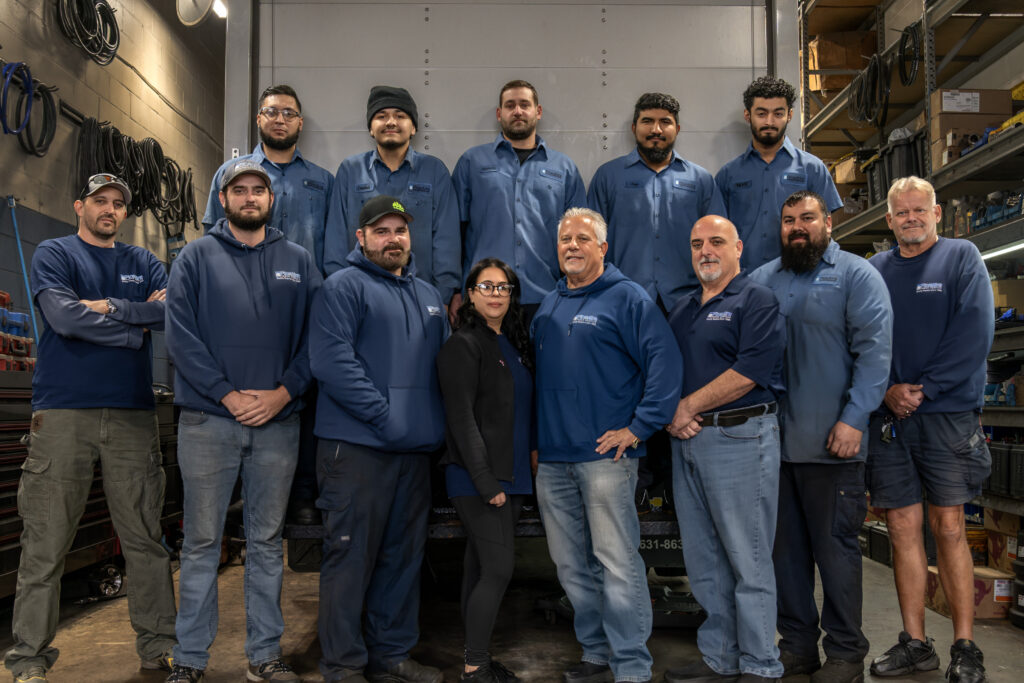
If you’re in the Long Island, NY area, and you need fast, efficient, and reliable truck repairs, don’t hesitate to bring it in to our 10-bay facility. Our diesel truck repair technicians have more than 20 years of experience (some have more than 40 years) diagnosing and resolving issues on trucks.
Contact us today to book a service intake on your next diesel truck repair job. We’ll help you learn how to prevent hydraulic pump issues from causing unnecessary downtime.
Frequently asked questions (FAQ) about hydraulic systems
1. Why do most hydraulic system pumps fail?
Most hydraulic system pumps fail because of fluid contamination. When fluid contaminates hydraulics, cavitation and aeration can occur.
Other common reasons hydraulic system pumps fail str because of the following:
- Normal wear and tear
- Incorrect installation or operation
- Lack of preventive maintenance
- Extreme temperatures
- Placing larger than normal loads on the pump
2. When should a hydraulic pump be inspected?
Yesterday (just kidding). Drivers should conduct a quick, pre-trip inspection of their hydraulic system each day.
Truck operators should conduct more thorough checks each month. For more help about best practices with caring for your truck, consider reaching out to a truck repair technician for truck advisory services. They can help verify the source of the issue for you and whether repairs are necessary or critical.
3. What are the most common warning signs that a hydraulic system needs repairing?
The most common warning signs that a hydraulic system needs repairing are:
- Loss of pressure
- Banging or knocking noises
- Fluid leaks
- Decreased performance