

The short answer: about 75,000 to 200,000 miles, with the possibility of lasting 300,000+ miles with proper preventive maintenance. That’s the general rule of thumb when people ask, “How long does a transmission last?”
After more than 40 years of conducting diesel truck repairs, we’ve noticed that the longest-lasting transmissions are those that are cared for by both their owners and their entire fleet support team.
If you’re wondering how long transmissions last, what to look for if you think a new transmission is needed, or how to maintain the health of your truck’s transmission, we can help shed some light on the subject.
In this article, we’ll help provide you with the right support and information about transmission lifespans so you can make more informed decisions for your truck.
You’ll also learn about the following truck transmission topics:
- Common warning signs that may indicate you need transmission work or a new/rebuilt transmission
- The importance of keeping a skilled diesel technician’s contact information in your back pocket for when repairs are needed
- Frequently asked questions (FAQ) about transmissions
9 Key signs that indicate you may need a new or rebuilt transmission
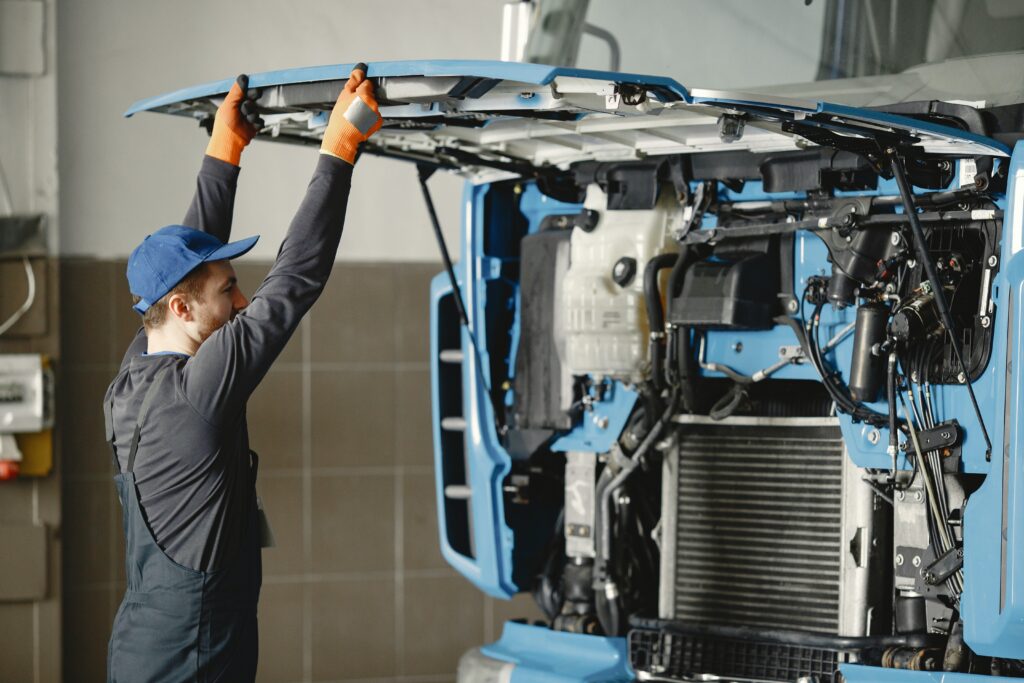
| 1. Your check engine light turns on 2. Your truck is stuck in gear 3. Potential leaks in transmission fluid occur 4. Delays in shifting gears occur 5. Burning smells that arise from transmission fluid burning 6. Strange noises from under the hood 7. Grinding noises 8. Truck popping or slipping out of its gear 9. Bright red puddle under the car |
1. Check engine light turns on
The “Check Engine” light is one of the most important indicators that something’s up with your truck. Given its bright display light, you never want to ignore your check engine light, as the initial issue that caused it to turn on could cause it to worsen if not checked.
Most importantly, the check engine light alerts you to a wide range of issues, one of the most important being that your transmission needs to be checked. Oftentimes, the most common transmission-related issues for which your check engine light could turn on include:
- Low transmission fluid
- Sensor malfunctions
- Problems with transmission shift solenoids (solenoids are key electromechanical or electro-hydraulic valves that help regulate how much — and how strong — transmission fluid flows through automatic transmissions)
If you’re experiencing any of the above issues, which could warrant the check engine light turning on, you’ll need to conduct immediate truck repairs.
And, if these issues go unaddressed, you could be in for some hefty repairs that cost a pretty penny. We’re talking full transmission rebuilds, that is, if the issues aren’t addressed, hence the advice to bring your truck into a licensed diesel repair facility as soon as possible.
2. Truck’s gears are stuck
If you notice your vehicle isn’t shifting gears or is experiencing significant difficulty doing so, you could be experiencing transmission issues. Nevertheless, shifting troubles don’t always mean transmission trouble.
- For manual transmissions: The issue could be with the clutch. If the clutch seems soft, or even less springy than it should, you might need to repair the clutch, not necessarily the transmission. Since the clutch tends to need replacing every 50,000 to 100,000 miles (sometimes, they can last up to 150,000 miles), changing gears with a faulty clutch can be challenging.
- For automatic transmissions: Since automatic transmissions don’t rely on clutches, if your car is stuck in gear, its likely cause could be a failing shift solenoid, worn-out transmission components, or problems with transmission fluid.
If you suspect issues with your transmission, your best bet for an efficient, speedy, and fool-proof repair is by taking your truck in for immediate or, better yet, routine transmission service. Routine transmission service at a diesel repair facility is the best way to avoid surprise repairs that can lead to costly repairs and unwanted downtime for your fleet.
By bringing your vehicle to a diesel truck facility, the team will conduct a thorough inspection of all components, ensure all components work well, and get you up and running in record time.
3. The truck’s gears are delayed in shifting
For automatic transmissions in particular, gears shift thanks to hydraulic pressure and electronic controls within the vehicle. If you depress the accelerator pedal, your vehicle will shift into a higher gear.
But, if you notice a delay, your truck’s transmission could be the culprit. Especially if the shifting is accompanied by jerks or jolts, the issue could be that dirty fluid, faulty shift solenoids, or more serious internal damage could be occurring in the vehicle.
4. Potential transmission fluid leaks occurring
Not all fluids that pool around the undercarriage of a vehicle are of concern. But, if you notice a reddish fluid below your vehicle, you could be experiencing a transmission fluid leak.
If, at this point, you’re asking yourself, “How long can I drive with a transmission leak on a truck?” know that you likely only have about 10-15 miles of driving. Otherwise, you could risk serious damage to your truck.
One way to identify transmission fluid is by observing the smell and texture of the fluid. Transmission fluid often is characterized by a slick texture and a slightly sweet smell, compared to motor oil, which tends to be darker in hue and oilier in smell and texture.
We can’t stress enough the importance of operating a transmission with adequate fluid, because the fluid ensures that the transmission’s moving parts don’t overheat or grind against each other. If the transmission’s parts aren’t lubricated according to the operator’s or manufacturer’s guidelines, you could face a potentially costly transmission rebuild or a new transmission altogether.
5. Unusual noises coming from under the hood

Every truck makes different sounds. After driving your vehicle for a while, you become more attuned to its everyday noises.
However, if you hear buzzing, clunking, humming, or high-pitched whining, you could be experiencing transmission issues. If nothing else, these noises tell you that something’s up, likely with your transmission, and you should address the source of the unusual sounds as soon as possible.
6. Burning smells that occur because of transmission fluid burning
Burning smells, wherever they may be, should be cause for concern. Just about everywhere except at a bonfire, burning smells typically indicate serious issues with most manufactured products.
If you smell burning plastic in or around your vehicle, this smell could be an early warning sign that your transmission may fail if not promptly addressed. The likely culprits of the burning smell could be:
- Worn-out clutch components
- Cooling system issues
- Excessive loads placed on your truck
- Low fluid levels
For a proper diagnosis of the issue, we recommend bringing your vehicle to an expert diesel technician to avoid potential transmission failures.
7. Grinding noises from within the truck
One noise in particular, the sound of grinding metal, is a very telling sign that you need a new or rebuilt transmission. Grinding noises indicate that internal components are wearing out and/or metal is rubbing against metal.
Nevertheless, the issue could also be something much less hazardous (and costly), such as issues with the clutch or low transmission fluid. Regardless of the source of the issue, if you hear grinding noises while driving, safely pull over and stop.
Then, contact a truck advisory or repair team to determine the safest possible way to transport your car from your present location to a nearby repair facility.
8. The truck slips out of gear
If your truck slips or pops out of gear, you definitely want to bring your truck in for maintenance and repairs. A transmission slipping, or a gear disengaging, can place you, your cargo, and nearby passengers in danger.
For automatic transmission-based vehicles, if your truck slips out of gear, the cause could be that your truck’s computer system is failing. Nevertheless, consistent gear slippage spells trouble, which usually calls for a transmission rebuild or replacement.
9. Bright red puddle under the truck
The last warning sign that indicates you might be experiencing transmission issues is if you see a bright red puddle of liquid pooling under your vehicle. Not only is leaking vehicle fluid a nuisance, but it’s also dangerous, a safety hazard, and potentially combustible under certain conditions.
A bright red puddle under a vehicle can indicate a leak in transmission lines. The best way to fix a potentially leaking transmission line is to bring the vehicle in for a transmission inspection and service.
Need an experienced truck repair mechanic who has experience with transmissions in Bayshore?
A truck’s transmission helps you and your truck navigate all types of roads, terrain, and drives. By design, it’s meant to help you haul cargo and the full weight of your vehicle.
But, after logging so many miles, even a heavy-hitting transmission needs a rebuild or replacement. If you’re in need of a transmission repair or replacement, and you’re in the Bayshore, New York area, we’d be happy to help.
We’re one of the longest operating diesel truck repair facilities on Long Island, New York. With more than 40+ years of experience serving trucks large and small, our diesel repair specialists can help you make your truck last longer with quality, reliable service.
To schedule routine transmission service or immediate transmission repair service, please contact us today. We look forward to providing you with exceptional customer service and quality, dedicated truck repairs.
Frequently asked questions (FAQ) about transmissions

1. How long does a transmission last?
A truck transmission can last anywhere from 100,000 to 300,000-plus miles, or seven to 10 years, depending on the type of care it’s given, wear and tear inflicted, and the driving habits of its operator.
Some heavy-duty truck transmissions can last more than 400,000 miles with correct service, cooling, and management of truck loads.
2. How long does a rebuilt transmission last?
A rebuilt truck transmission can last anywhere from 75,000 to 150,000 miles, or about five to 10 years, depending on usage patterns, driving habits, and general wear & tear.
3. What are the signs of a failing transmission?
Signs of a faulty transmission include:
- Your vehicle’s “Check Engine” light turns on
- Your truck is stuck in gear
- Your transmission is leaking transmission fluid
- Gear shifting delays occur
- Burning or unusual smells come from the transmission
- Strange noises, whether grinding noises, popping, or hissing, occur
- Gear slippages
- Bright red puddles and leaks below the truck
- A dragging clutch (for manual transmissions)
- Grinding or shaking noises or sensations within the truck
- The truck is unresponsive
4. Is it worth replacing a transmission?
In general, replacing a transmission can be worth the investment of time, money, and resources in the following situations:
- If the repair will cost less than half the market value of the truck
- If the truck’s engine and body are in solid shape
- If you plan to keep your truck for several more years
If you choose not to replace your transmission, but still would like to keep your current truck for two or more years’ worth of operation, rebuilding a transmission is an alternative, comparable option.
5. What kills automatic transmissions and manual transmissions?
Using the wrong fluid in your transmission, exposing your vehicle to excessive heat, making frequent & abrupt stops, shifting gears into reverse while driving, or driving the vehicle before it has a chance to warm up are likely ways to damage an automatic or manual transmission.
Pine Aire Truck: Complete Diesel Truck Repairs and Transmission Repairs Since 1986