

Can a bad differential cause transmission problems? The answer is yes.
But look: If you’re like most drivers, your front or rear differentials aren’t the first truck parts you think about when deciding whether your truck needs repairs.
And yet, this drivetrain component located midway between the wheels of your vehicle is crucial because it helps you turn and works in tandem with your transmission.
Understanding the impact of your differential on your truck’s transmission is critical to making your transmission last for years to come. With proactive preventive maintenance and a solid understanding of the mechanisms behind differentials, you can avoid differential trouble and its impact on your transmission.
We’ll provide some helpful information about differentials so you can make more informed decisions about your truck. In this article, we’ll cover the following:
- What is a differential?
- What causes a differential to go bad?
- Common signs that indicate trouble for your differential and transmission
- How diesel truck mechanics fix bad or faulty differentials
- What to do if your differential starts causing trouble
- Frequently asked questions (FAQ) about truck differentials
What is a differential?

A differential is a key component of your drivetrain that helps work with your transmission. It also controls steering by divvying out the proper revolutions per minute (RPM) between the two opposite wheels of your truck.
For example, when turning, your differential helps distribute the right amount of engine torque to the wheels on either side of your vehicle so the wheels can spin at different speeds. You can thank your differential for smooth turns because it helps adjust the power from your engine and transmission to each wheel.
What causes a bad differential (and differential problems)?

Differential problems and failures usually occur as a result of normal wear and tear. A few other common causes for differential failures include the following:
- Low fluid in key parts of the vehicle
- Contaminated fluid due to the differential being submerged in liquid
- Mismatched tires or tires that aren’t compatible with the truck
- Incorrect driveline angles
- Worn axles and joints
If you feel your differential needs attention, you may want to take a look at your engine or transmission for leaks, as you may not be able to drive long before it potentially fails.
5 Common signs that indicate differential trouble
Worth noting is the fact that issues with differentials often sound like issues with the transmission. Nevertheless, a diesel truck technician has the tools and experience to pinpoint the root cause of the noise.
Some of the most common signs spelling out differential issues include:
| 1. Whirring noises when slowing down 2. Clunking noises while driving 3. Vibrations or vehicle shuddering that occurs as you increase speed 4. Reddish stains below the truck where you parked it 5. Differential fluid that contains a significant amount of metal (which can indicate that the differential has potentially failed) |
If left ignored, a differential can create metal-on-metal friction, which can wear down the surfaces of key components in your vehicle. The heat created by the friction can cause issues with the transmission and other components.
What’s more, a failing differential means turning corners is more challenging and dangerous, thereby also causing extra wear and tear on tires.
If you notice any unusual signs while driving your truck, you can never do wrong by bringing your truck in to a truck repair facility. A quick check can make all the difference between a possibly repairable differential and a differential that needs to be fully replaced.
Save time, money, and potential vehicle downtime by bringing in your truck to a fully operational diesel truck repair facility.
How do diesel mechanics fix bad differentials?

Once you bring your vehicle to a diesel mechanic, a seasoned diesel mechanic will likely conduct any of the following to diagnose your vehicle’s differential:
- Isolating the noise or potential leak with a seal replacement or internal rebuild
- Changing out differential fluid
- Checking your axle bearings, pinion gears, and ring gears
- Conducting repairs on the differential’s side and spider gear set, carrier, and roller bearings.
- In select cases, a professional diesel truck repair technician will rebuild or replace your differential.
A bad differential can impact your truck’s ability to fulfill key orders and shipments, thereby reducing your profitability and increasing unplanned downtime. What’s more, bad differentials can cause transmission problems and potential catastrophic vehicle failure if not timely resolved.
To avoid unnecessary repairs, we recommend bringing your vehicle to a diesel truck technician to inspect differential parts like bearings, gears, clutch packs, and axles. Your diesel repair team will get the job done right, so you and your truck can get back to doing yours.
What to do if the transmission or differential on your vehicle goes bad
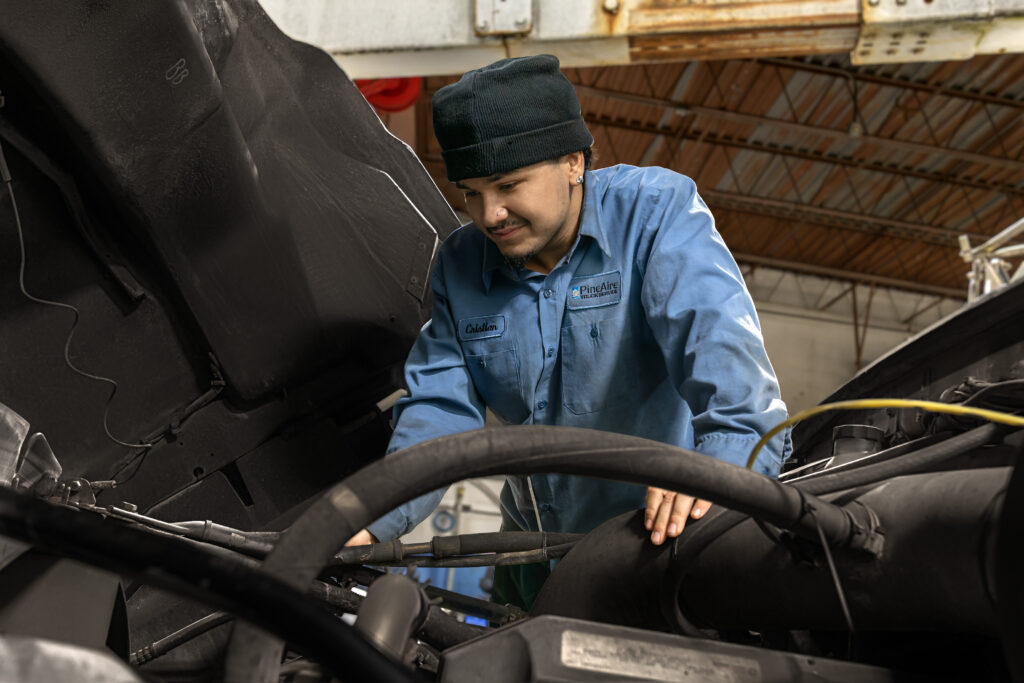
Before starting your day, if you notice your transmission or differential acting up, we always recommend conducting a pre-trip inspection to identify any potential issues before they become catastrophic failures. Nevertheless, if you’d like additional eyes on the area in question, you can always bring your vehicle in to a diesel truck repair specialist.
And, if you happen to be in the Bayshore, New York area, we’re happy to help. Our team is ready to help you on a moment’s notice. Best of all, our modern 10-bay facility features state-of-the-art technology that can help diagnose your vehicle and prepare it for the road ahead.
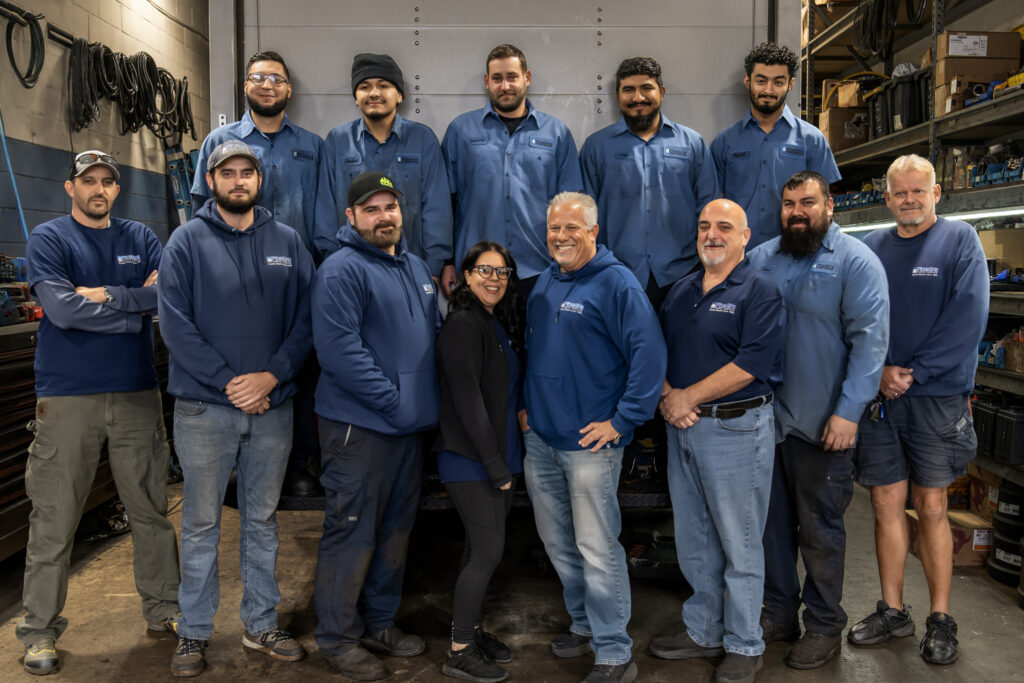
If you’re looking for a run-of-the-mill diesel repair shop, look elsewhere. But, if you need a break and a no-nonsense team of truck repair technicians with more than 40 years of experience, we’ve got your back.
📞To schedule service beyond expectation, contact us today.
Frequently asked questions (FAQ) about differentials
1. How much does fixing a rear differential cost?
Truck repair shops quote numbers all over the map. We’ve seen rear differential replacements cost as little as $400 and as much as $8,000. The cost can vary depending on the following factors:
- The vehicle make, type, and model
- The type of differential
- Rebuilding versus replacing the housing of the differential
- Labor costs
2. Can you operate a truck with a bad differential?
We strongly recommend you not drive your vehicle with a bad differential. Doing so can put you at risk of catastrophic failure.
If you operate a truck with a bad differential, you risk losing control and power to the wheels of your vehicle, and inflicting further damage to it.
3. Does a faulty differential cause transmission problems?
Yes. A faulty or bad differential can cause overworked brakes and potential issues, like harmful metal shavings from a failed or worn differential entering a transmission.
Pine Aire Truck: Service Beyond Expectation Since 1986