GAWR, GVWR, and GCWR: If these acronyms sound like a mouthful or like a large dinosaur roaring through a busy metropolis (cue Godzilla), you’d be excused. While gross axle weight ratings (GAWR), gross vehicle weight ratings (GVWR), and gross combined weight ratings (GCWR) may sound, well, gross, they’re extremely helpful for truckers and fleet operators in staying in compliance with DOT inspections.
The reason is that weight ratings and weight classes can affect all of the following crucial elements needed to create a seamless haul:
- The type of CDL requirements truckers must obtain when hauling heavy cargo
- Registration, insurance, and permits needed to operate light-, medium-, and heavy-duty trucks
- Route planning and avoiding restricted bridge access
- Avoiding costly tickets, delays, and citations
If you’re looking to better understand GAWR, GVWR, and GCWR, you’ve come to the right place. In this article, we’ll take a look at what each of these three acronyms is as they relate to truck trailers, as well as why they’re important, where to find them on a trailer, and where to get advice for operating within each weight limit.
What does Gross Axle Weight Rating (GAWR) include?
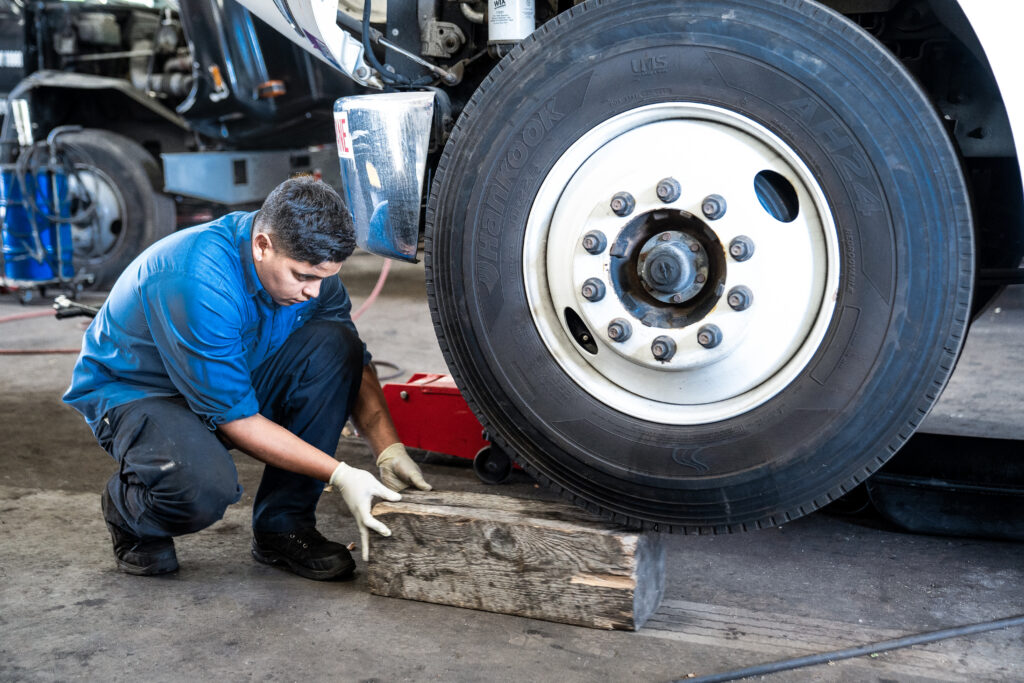
GAWR for trailers stands for Gross Axle Weight Rating. This rating refers to the maximum weight that the axles of a trailer can support.
Each axle has its own GAWR. For example, you can expect most axles to have a rating in the range of thousands of pounds, as follows:
- Class 1-2 trucks: The front axle GAWR is usually 3,000 to 4,000 pounds. The rear axle GAWR is usually 3,500 to 6,000 pounds.
- Class 3-6 trucks: The front axle GAWR is 5,000 to 8,000 pounds, and the rear axle GAWR is 10,000 to 15,000 pounds.
- Class 7-8 trucks: These heavy-duty trucks, tractors, semi-trucks, and dump trucks often have a GVWR of 26,000 pounds or more with 10,000 to 14,000 pounds distributed to the front axle, up to 20,000 pounds distributed to the rear axle, and up to 34,000 pounds distributed to a dual rear axle.
More important than weight alone is the fact that the weight must be distributed evenly throughout each axle. In addition, even if your trailer weighs less than the gross vehicle weight rating, you must ensure you’re not overloading axles beyond their limit.
In other words, GAWR helps prevent tire failures by ensuring each axle receives only as much weight as it can carry.
What does Gross Vehicle Weight Rating (GVWR) include?

Gross vehicle weight rating (GVWR) refers to the maximum total weight that a trailer or vehicle can carry. The GVWR contains the weight of the trailer itself plus any extra cargo or equipment loaded on it.
The trailer’s own weight and everything put on or in it must be within the limits of the GVWR. The manufacturer is responsible for determining the GVWR, and they’re responsible for designing the trailer (or vehicle) and its frame, axles, suspension, and tires to ensure that the trailer (or vehicle) can manage its weight.
The GVWR is the maximum weight, or threshold, for the trailer and its towing capacity.
What does Gross Combined Weight Rating (GCWR) include?
Gross vehicle combined weight rating is a shorthand way of mentioning the total combined weight of both the vehicle and the trailer. Unlike GVWR, GCWR takes into account both the weight of a vehicle and its attached trailer.
This particular rating takes into account passengers and cargo in both a vehicle and trailer, versus only passengers and cargo in the vehicle.
What is payload capacity?
While not an acronym like GAWR, GVWR, or GCWR, payload capacity refers to the maximum total weight of cargo, passengers, and gear that a vehicle can safely carry inside its cabin and bed.
Payload capacity can be calculated by subtracting the weight of the vehicle when it’s empty, parked, and ready to drive (also called curb weight or empty weight) from its maximum total weight limit, including the empty truck and payload combined (or the GVWR).
Why are GAWR, GVWR, and payload capacity important?

We’ve unpacked vehicle, axle, vehicle plus trailer, and cargo & passenger weight capacities for various fleet operations. But why are they important? What do they have to do with the day-to-day work fleet operators and diesel truck operators do?
GAWR, GVWR, GCWR, and payload capacity are important for the following reasons:
- They help prevent serious safety hazards: Loading up a truck or trailer with more than it can handle can cause brake failures, tire blowouts, and loss of control due to strains on the trailer and vehicle. Plus, if the trailer and vehicle are loaded up with excessive weight, it’s prone to shaking or tipping over at faster speeds. Operating within the right weight restrictions can help reduce the risks of accidents on the road.
- They help fleets comply with legal requirements: Towing a trailer beyond its weight ratings can result in fines or penalties if you’re checked at a weigh station or stopped by DOT officials. Especially for interstate towing, specific licenses may be required for trailers operating under certain weight restrictions.
- Overloading can be costly: Considering that most fleet operators hold insurance on their vehicles, operating a vehicle that’s beyond the legal weight restrictions set for it can spell trouble should the truck cause an accident. Insurance policies may not protect you if your truck isn’t compliant with weight restrictions. Your warranty may also not cover the repairs for your trailer, that is, if you operated it beyond the weight limits and restrictions of your vehicle.
- They help ensure your vehicle doesn’t overheat or fail: Most trucks and trailers are set at specific thresholds, carrying capacity-wise, because carrying more weight than your truck can tow can cause undue stress on hydraulic systems and other mechanical parts.
To prevent non-compliance with authorities, avoidable truck repairs, and insurance issues, we always recommend checking the GAWR, GVWR, GCWR, and payload capacity ratings on your truck. Doing so will help you operate safely and avoid unnecessary breakdowns or fines.
Where can I find weight ratings on my trailer?

Depending on the truck or the rig, most manufacturers place the GVWR, GCWR, and GAWR on a safety compliance label or data plate.
The label and/or plate can be found on the frame near the inside door frame. You’ll also often find the vehicle identification number (VIN) in this same area.
Every truck and trailer is different, and each requires careful attention to weight ratings to ensure successful, safe, and compliant operation with the law.
If you’re wondering how to stay in compliance with your truck, your best bet is to speak with a truck advisory team.
Where can I get truck advice to stay in compliance with weight restrictions?

One of the best places to receive advice on how to maximize the life of your truck while staying safe and compliant with weight restrictions is with a truck advisory team.
Often found in local truck repair shops, truck advisory teams provide solutions to today’s fleet operation issues. Whether dealing with roadside inspections, training seminars, or truck emissions education, truck advisory teams are certified to provide everything from emergency repairs to troubleshooting with a truck component.
Most importantly, truck advisors work with you to decide which repairs time and money will allow. Plus, truck advisory specialists are located all over the country.
Truckers: If you happen to find yourself on the East Coast on Long Island, New York, our truck advisory team is here to serve you for all your needs. Whether you’re a team of one or 30, we’re here to help you deliver outstanding results and keep you fully operational.
To schedule an appointment for truck advisory, don’t hesitate to contact us today. Our dedicated and friendly service advisors would be more than happy to help.
Until then, we wish you all the best, and we look forward to hearing from you soon.
Pine Aire Truck: Truck Advisory Service for Vehicles Large and Small Since 1986