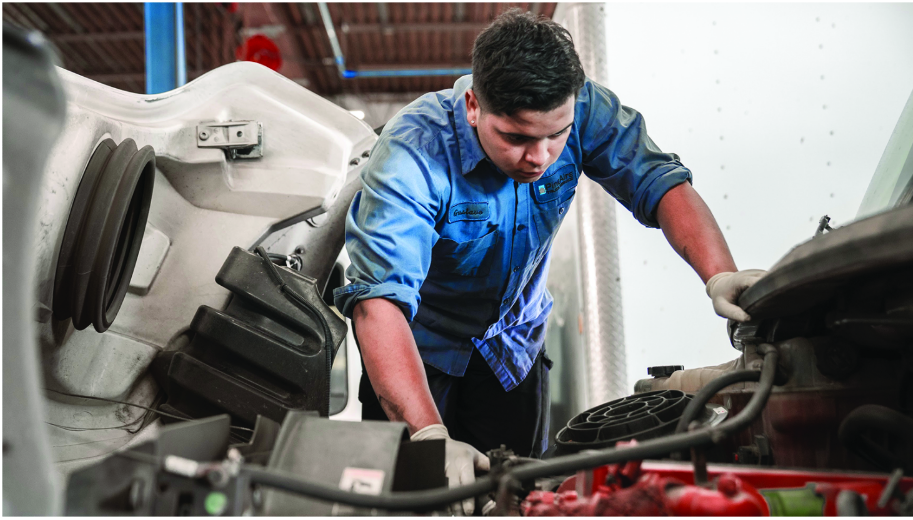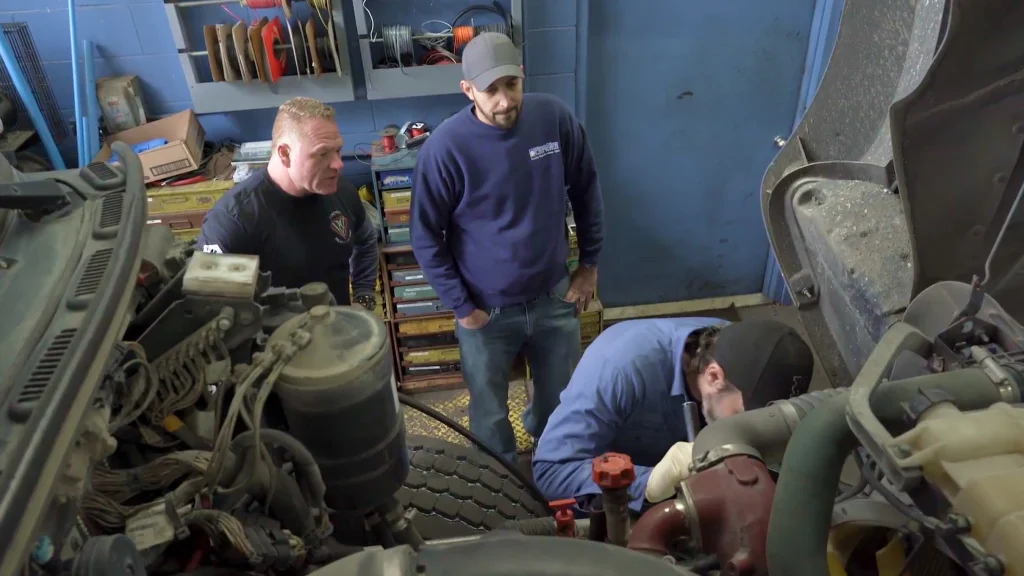

Diesel engine diagnostics: It’s the process of inspecting, scanning, troubleshooting, and diagnosing diesel engine systems to determine performance issues, system faults, and internal wear & tear. Done right, and you can be on your way with an engine that lasts long and keeps moving strong.
But neglecting a diesel engine diagnostic test can lead to engine issue, or worse, catastrophic failure. So, where do you start with conducting a diesel engine diagnostic?
Pine Aire Truck here: For more than 40 years, we’ve helped New York truck drivers conduct diesel engine diagnostic tests and inspections and helped fleet operators save thousands of dollars on truck repairs and NY State and DOT inspection violations.
All with a little help from diesel engine diagnostics.
If you’re curious about how diesel engine diagnostics work and the common systems worth checking during an inspection, you’ve come to the right place. In this article, we’ll walk you through 10 common diesel engine diagnostics worth monitoring to keep your diesel engine running strong and long.
Ready? Let’s dive in.
Engine components to monitor that can cause poor performance or loss of power

So what are some of the key engine components to keep on your checklist when it comes to running a diesel engine diagnostics test? The key components to monitor during the diagnostics process include:
- Cylinders: Cylinders are where combustion occurs.
- Crankshaft: The crankshaft is a vital engine part that changes the up-and-down motion of pistons into circular, rotational motion.
- Fuel injectors: They spray fuel into the cylinder to support combustion.
- Glow plug: Glow plugs help preheat air-fuel mixtures to support ignition of the engine.
- Air filter: Prevents dirt and debris from entering an engine.
- Pistons: Move up and down in the cylinder to help compress air and fuel.
These engine components often are subject to performance problems, and they’re the first point to begin triaging engine issues. Let’s take a look at 10 of the most common diesel engine diagnostics to monitor within these systems.
10 Common diesel engine diagnostics to monitor
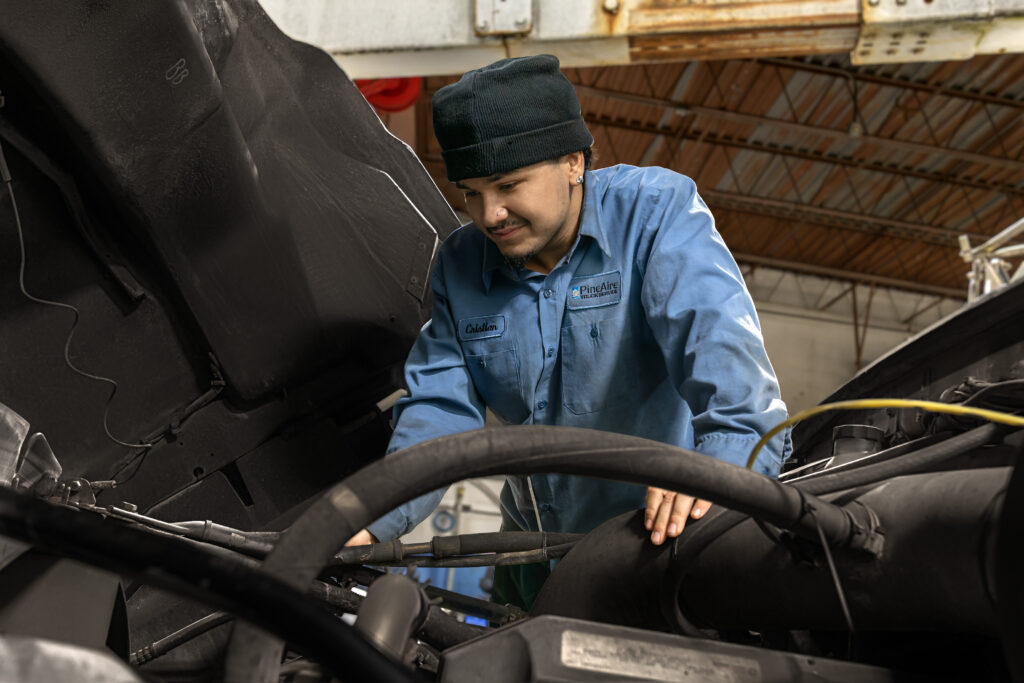
A few of the most common diesel engine diagnostics to monitor include:
| 1. Common fault codes 2. Fuel system diagnostics and components 3. Air intake systems components 4. Electrical system components 5. Cooling system components 6. Oil and lubrication levels 7. Unusual noises or vibrations from the engine 8. Compressor issues 9. Vehicle exhaust outputs and systems 10. Preventive maintenance logs |
In the next few sections, we’ll elaborate on key information about diesel engine diagnostics to help you identify and troubleshoot engine issues.
1. Common fault codes used with an OBD scanner
Semi trucks, pick-up trucks, and most diesel trucks use electronic control units (ECUs). The ECUs store fault codes when the system detects an issue.
Use a diagnostic scanner to identify fault codes, determine why dashboard sensors may have gone off, and gain valuable information about the source of the issue. Once you determine the code, check your vehicle owner’s manual to determine what the code is telling you about your vehicle.
The more you can familiarize yourself with the fault codes displayed on your dashboard, the more informed you’ll be to make actionable decisions that benefit your vehicle and your operation.
2. Fuel system diagnostics and components
Some of the most important parts of a truck reside in the fuel system. Since the fuel helps power your truck, we recommend inspecting the following fuel-related parts:
- Fuel pump: Ensure that your fuel pump delivers the right fuel pressure to your vehicle.
- Fuel filters: Change and clean fuel filters on the regular to help prevent fuel flow from being restricted.
- Fuel injectors: Clogged, cracked, or dirty fuel injectors can cause leaks, power loss, potential rough idling, and exhaust emissions that can affect your vehicle and the environment. Check faulty injectors by listening for unusual noises, especially knocking noises.
Consider using a fuel pressure gauge to check on the life of the fuel injectors. Doing so can give you a read on what to do next to support the longevity of your diesel engine.
3. Check air intake systems
Air intake systems supply, well, air to your diesel engine. Proper air flow is key to ensuring the proper air-fuel mixture for your truck. Consider checking the following components to ensure your air system operates as it should.
- Air filter: Clogged air filters can lead to a rich air-fuel mixture instead of a balanced air-fuel mixture. Make sure to replace any dirty or damaged air filters to ensure the proper balance.
- Turbochargers: Check that the boost pressure is adequate and the turbine is in sharp shape.
- Intercooler: Blocked or leaking intercoolers can cause sluggish acceleration, black exhaust smoke, and poor fuel economy. A faulty intercooler can cause an engine to receive hot and improperly balanced air, which can be detrimental to its performance and health.
4. Monitor electrical systems

Many diesel engine issues can arise as a result of faulty electrical components. Some of the most common electrical components to check include:
- Battery: Ensure the battery is charged and any connection access points are in solid shape.
- Alternator: Ensure that the alternator charges appropriately; otherwise, your engine may fail to start.
- Cranking: Check the starter motor for slow or no cranking. Your battery may also be dead, or your cable connections may be loose.
Consider enlisting a handy tool called a multimeter to troubleshoot electrical systems.
The multimeter includes a voltmeter, ammeter, and ohmmeter to check the voltage, current, and resistance of electrical systems like your battery.
5. Inspect the cooling system for signs of overheating
Many diesel engine problems often come from systems overheating. One way to ensure that the components in your engine don’t overheat is by checking the following parts in your cooling system.
- Radiator: A radiator’s number one job is to remove excess heat from an engine. Ensure the radiator isn’t clogged or leaking.
- Coolant: Coolant helps the engine manage heat. Check whether you have enough coolant to help absorb heat from the engine block.
- Water pump: Leaks are the culprit here. Check your water pump for any potential leaks to avoid overheating.
- Thermostat and fans: Some internal engine performance problems come from stuck thermostats or broken fans. Consider pressure testing your cooling system for leaks, malfunctioning components, or broken parts.
By conducting regular diesel engine maintenance on your cooling system, you can pinpoint areas for repair to prevent the possibility of overheating.
6. Ensure proper oil and lubrication
The oil and liquid you fuel your engine with is crucial to its success. Consider checking your truck’s oil levels, topping off as needed, and assessing the quality of the oil if it’s changed, degraded, or becomes contaminated.
Depending on the make, model, and size of the truck, we also recommend changing your truck’s oil filters every 5,000 miles to 25,000 miles to avoid running your truck on bad fuel. Doing so will ensure your oil stays clean.
7. Check for any strange noises or sensation
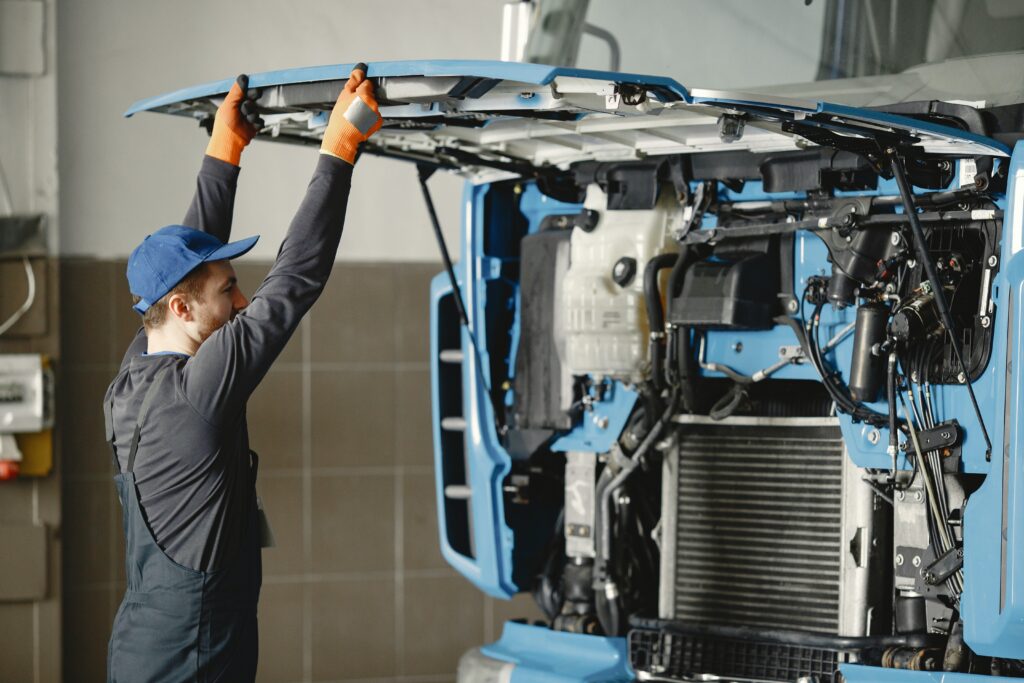
Knocking, rattling, and excessive vibration can signal issues with a variety of areas, including engine mounts, crankshafts, bearings, valve timing, fuel injectors, and pistons.
Give all the parts of your engine a quick check, and make sure to tighten components and replace parts that have endured excessive wear and tear.
8. Check the compressor
A truck’s air compressor helps pump and convert outside air into high-pressure energy for its air suspension and braking systems. Low compression levels can cause poor engine performance, misfires, and difficulty starting the truck.
As such, we always recommend maintaining each cylinder’s compression levels according to your truck manufacturer’s specifications. If, after running a compression test, you find that compression levels are above or below recommended manufacturer guidelines, you may need to repair valves, pistons, or lines in and around cylinders and the compressor.
9. Monitor and evaluate exhaust systems and vehicle emissions
Three different systems and three different checks: We recommend monitoring exhaust systems to minimize harmful emissions output. The three different systems to keep in mind are:
- Exhaust gas recirculation (EGR) valves: These valves help lower toxic nitrogen oxide (NOx) emissions, so if you notice the valve is clogged, you’ll want to check it.Failing to check EGR valves can lead to power loss or inconsistent engine performance.
- Diesel Particulate Filters (DPF): Built as an exhaust after-treatment device, DPF help trap and remove soot and particulate matter from exhaust before it leaves the vehicle. Consider running a DPF regeneration to help remove any excess soot or harmful exhaust particles.
- Selective Catalytic Reduction (SCR) systems: SCR systems help clean exhaust by turning harmful nitrogen oxides (NOx) into harmless nitrogen and water vapor. Diesel exhaust fluid (DEF) is placed into the hot exhaust stream before it passes through a catalyst, which then splits the pollutants into nitrogen and water vapor. One way to ensure SCR systems are working well is by topping off DEF levels.
10. Compare the current issue with previous preventive maintenance records
Sometimes, a truck can present similar symptoms across several of the nine issues mentioned above. In the case where a truck presents itself as having similar issues, we recommend reviewing your preventive maintenance logs.
Whether you’re dealing with excessive smoke, turbocharger issues, or a loss of power, analyzing trends from previous diagnostic inspections can help you identify and resolve the root cause of the issue. Sometimes, taking a step back can help you better address common diesel engine problems moving forward.
Choose a professional diesel engine repair team for quality truck advisory and repair service

Whether you’re dealing with a faulty fuel injection system or hard starting, you don’t have to go at it alone. A truck advisory and repair service team can help diagnose and repair the source of the issue. Using the latest diagnostic tools, your diesel technician will provide you with live data that explains away and provides solutions for the issue.
That’s how we operate at Pine Aire Truck. We’re all about providing you with actionable data & quality maintenance and repair service that empowers you to make better decisions about your engine operation.
Whether you need us to look at camshafts and crankshafts or the fuel mixture in your combustion chamber, our master diesel technicians have the experience and expertise to fix any issue your truck brings your way.
If you’re in the Bayshore, New York region and looking for diesel engine or truck repair service, give us a call at (631) 243-1900 or book a service appointment online.
Pine Aire Truck: Professional Diesel Engine Repair Service in Bayshore, NY Since 1986